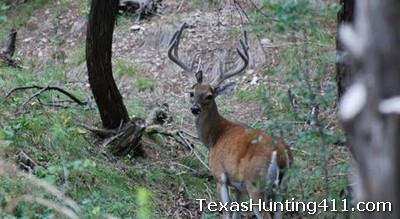
The Right Density – Number of Whitetail Deer


Let’s face it, white-tailed deer hunters like to see deer when they go out hunting. However, they also understand that deer populations should be managed on an annual basis and that harvest through regulated hunting only helps the health of the remaining deer herd and habitat. Many hunters, especially those involved in deer management programs, are interested in determining the exact number of whitetail deer per acre their property can support. Although deer density is important, it’s not critical that the property be managed to contain the maximum number of animals.

Sure, it would be great to have a healthy herd of the maximum number of deer a property can support right now. The problem is, habitat condition and quality is constantly changing. It changes from season to season and from year to year. Deer density is important, but I’ll submit that it’s more important to have a lower density than a higher deer density. For example, let’s just say that a property can support 1 deer for every 10 acres under perfect conditions. That’s great, but how often is habitat in perfect condition? Holding a herd at 1 deer per 10 acres gives no wiggle room, but an estimated deer density of 1 per 12-15 acres means deer will have adequate forage even under less than perfect conditions.
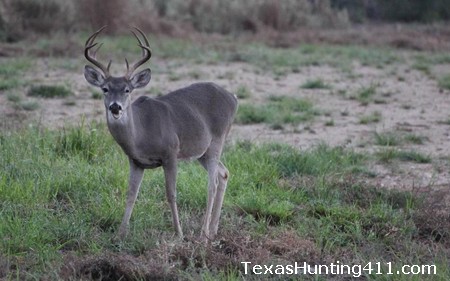
Whitetail Deer Density - The Right Number of Deer Per Acres of Habitat


This puts less stress on the deer manager to make the exact right call at the exact right time. It also means deer will be healthy and that habitat will improve. This means the deer found there can be even more selective when it comes to choosing the most desirable, high protein plants. Protein translates into body mass and antler growth. So although we live in a world of maximum everything, I think a less than maximum deer population is right on the money.

Source: “Not all whitetails in North America eat the same amount of food in a day. But strictly for purposes of illustration, let’s assume that an “average” deer, given as much as it would like to eat, consumes 7 pounds per day. In a year, that totals 2,555 pounds.

Let’s also assume that the natural habitat averages 11 percent protein on a year-round basis. (The general consensus among biologists is that whitetails need approximately 16 percent protein during the antler-growing/fawning period from early spring through summer. Eleven percent would be representative of quality native habitat such as is found in South Texas. A study in Alabama showed an annual average protein level of 7 percent in the natural habitat, which would be representative of much of the rest of the Southeast as well.)

Let’s assume that an acre of natural whitetail habitat can produce 200 pounds of deer feed per year, but that only half of that (100 pounds) can be eaten without damaging the habitat. (In the Southeast, average production of native deer forage is closer to 150 pounds per acre.)

Using an annual production of 100 usable pounds of deer browse per acre of natural habitat and an annual requirement of 2,555 pounds of feed per deer, we see that 25.6 acres are required to support one deer throughout the year.

But remember: This is about right for good natural habitat – habitat that has a high protein level. With an average protein level of only 11 percent in the herd’s diet, at a density of a deer per 25.6 acres body and antler sizes are going to be well under the herd’s genetic potential. In addition, many (indeed, most) whitetail populations are underfed, due to excessive foraging pressure on the available vegetation. Put all of this together, and it’s easy to see why we have so many stunted and stressed herds today.”
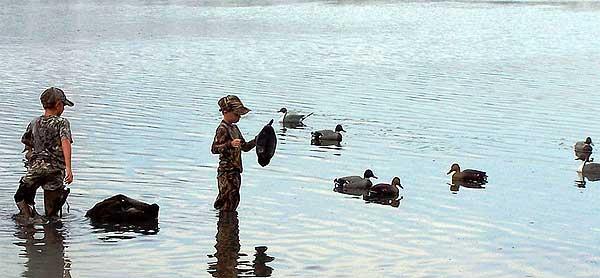

Texas Youth Hunting Weekend 2013

Youth Hunting in Texas

It’s hunting season in Texas so that means Texas Youth Hunting weekend for the youngsters. One of the best traditions is passing down the hunting heritage to the next generation each fall. Young hunters will get the first shots during special youth-only hunting seasons for white-tailed deer, waterfowl and Rio Grande turkey this coming weekend, October 26-27. And for those that will get their first shot this fall, you know they are pumped up!

During the statewide special youth-only hunting weekend in Texas, licensed youth 16 years of age or younger will be allowed to harvest white-tailed deer and Rio Grande turkey. The youth-only waterfowl season in the North and South Duck Zones is for licensed youth 15 years of age or younger. A Special Youth Hunting License ($7) is required.

Texas Youth Hunting Weekend 2013


General Season Regulations Apply for Youth Hunters

General season bag limits for the county hunted apply during the youth-only weekend, but some additional hunting restrictions may apply in certain areas so be sure to check the 2013-14 Outdoor Annual of hunting and fishing regulations before heading afield.

Youth Hunting on Public Land

To make room for the new generation of Texas hunters, the Texas Parks and Wildlife Department has made an extra effort to open as much land for public hunting as possible to youth hunting on department-managed lands. Youth who are hunting on TPWD lands must be accompanied by a supervising adult 18 years of age or older who possesses the required Annual Public Hunting permit, a valid hunting license and any required stamps and permits.

Worm in Deer Nose – It’s Normal

Find maggots in your deer’s head or nose?

Yes, it’s gross, but these “worms” are totally normal. No, it’s not some brain eating virus or other deer disease. It’s just a really big maggot. The larvae is laid in the nasal passage by the adult fly in the warmer months of the year, typically the summer. The larvae lives deep within the nasal passage until the following spring then crawls out, goes into the soil and develops into an adult. A deer biologist told me that the worm/maggot/etc. was not harmful to the deer or to people that eat the venison. However, I suspect that these nasal bots freak out many hunters each year. And not the mention the deer that has this thing crawling around in their sinuses.

The maggots do not really cause the deer any harm, but rather just survive of the nutrition of the mucous and other food products that get up in there. After an “infected” deer is shot the deer will begin to cool off. This is when the alleged deer worms start moving around, wondering what went wrong. This is also when most hunters encounter them, as the maggots fall to the ground or are seen exiting the mouth and nose. Continue reading Worm in Deer Nose – It’s Normal

Big Buck Shot by Bowhunter in Medina County, Texas

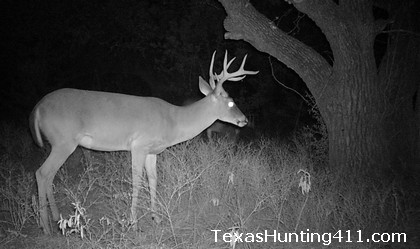
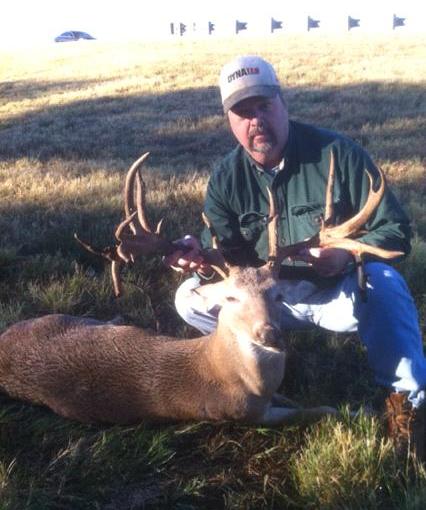
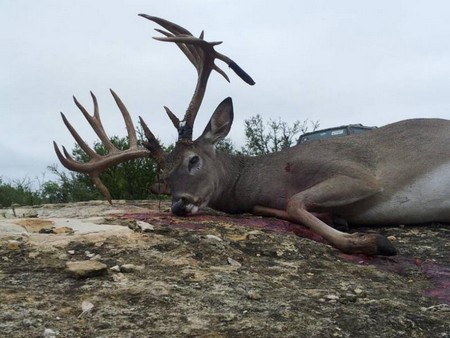
This giant whitetail buck was captured on game cameras in a part of Medina County, but one bowhunter was fortunate enough bag this brute during the early part of the 2013-14 Texas deer hunting season. But as it turns out, it was not all luck. The property had been involved in a deer management program that allowed this deer to definitely reach its genetic potential. This buck had it all: age, genetics and thanks to some rain this year, nutrition.

This free-ranging trophy buck is no doubt the buck of a lifetime for any whitetail hunter. The large frame, long points and four droptines make this buck something special. Congrats to the hunter on a successful management program and an obviously awesome hunt. Now, time to find me a lease in Medina County….

Texas Bowhunter Bags Trophy in Medina County


Continue reading Big Buck Shot by Bowhunter in Medina County, Texas

Public Hunting in South Texas with an APH Permit

South Texas is home to some really big ranches that provide quality hunting for whitetail deer, dove, turkey, quail and feral hogs, but did you know that it also provides some quality public hunting lands for many game animals? Texas Parks and Wildlife Department (PTWD) has many public hunting opportunities available to residents and non-residents willing to get out in the field. One of the best programs going is the Annual Public Hunting (APH) Permit.

The APH comes at a cost of $48, and allows you access to hunt over 200 properties across Texas for a wide range of species. For the annual fee, hunters may hunt many different units and may also hunt as many times as they like within the guidelines for each individual lease. Hunters may obtain an APH permit at local retailers where they purchase their hunting and fishing licenses.

There are many quality public hunting opportunities from San Antonio to Brownsville. The state has a high number of quality small game leases that focus on mourning and white-winged dove hunting, but they also have leases open for early-season teal, rabbits, hares, squirrels, and even bobwhite and scaled quail. In addition, wildlife officials just added 11 new public hunting leases encompassing over 5,000 acres for the 2013-14 hunting season in Bexar, Frio, and LaSalle Counties. The majority of the hunting targets mourning and white-winged doves.

Dove Hunting in Texas 2013

For hunters living in or near San Antonio, there are two 500 acre units that are close to home. The Somerset and Lone Star Pass units both allow dove and teal hunting. Despite the close proximity to the city, there is plenty of space to enjoy a fun and safe dove hunt.

Frio County, just an hour southwest of San Antonio on Interstate 35, has arguably some of the best public dove hunting available. With 7 public dove hunting leases in Frio County, hunters can expect to find doves all season long. There is also ample space to spread out and enjoy some safe hunting opportunities. The 1,451 acre Mimosa Farms Units are once again gearing up for a great season, but don’t forget about Mimosa Farms 526 outside Dilley, which also offers good hunting opportunities and is large enough to accommodate a large number of hunters.

There are an addition 10-plus public hunting leases in deeper South Texas, which range between 40 acres and 300 acres. These leases are spread out and offer a great opportunity to the hunters looking to cover some ground spend some time in the field. Based on TPWD white-winged banding efforts and surveys, the communities of Alice, Kingsville, and Falfurrias hold very high populations of white-winged doves, and the coastal bend has thousands of acres of cropland which mourning doves flock to.

TPWD offers up some quality properties for hunters looking for public land in South Texas that possess the APH public hunting permit. The leases primarily are geared towards dove hunting, but many also offfer rabbit, hare, and squirrel hunting, depending on the unit. It’s always nice to get down South and you never know what you are going to see. South Texas boasts some great hunting for whitetail deer, dove, turkey, quail and feral hogs. Just make sure to follow the regulations for the unit that you are hunting.

Texas Deer Hunting Regulations Working: More Mature Bucks

One of the biggest factors is growing and producing quality whitetail bucks is allowing them to get some age on them, to reach maturity. This is not a whitetail hunting secret by any means, but it can be something hard to implement, especially on smaller properties. It seems the age of harvested bucks may have very well been a limiting factor in many parts of Texas, at least according to wildlife officials with Texas Parks and Wildlife Department (TPWD).

If you’ve ever been out to the Kerr Wildlife Management Area to attend one of their deer management seminars then you know that age, genetics and nutrition are the key ingredients to growing real trophy bucks. In the past, however, it was hard, maybe even downright impossible, to let a younger, good looking buck walk when you knew the hunter right across the fence was going to put a bullet through his lungs, hang him high in a tree and pop his hide off like a dirty bed sheet. That all changed when antler restrictions hit many Texas counties. It not only providing the regulatory tool for allowing bucks to age, but most hunters feel pretty good about it too.

Texas Deer and Antler Regulations

TPWD: While areas like South Texas are known for producing exceptional whitetail bucks, most anywhere in the state is capable of producing good bucks every year. In fact in 2012, two archery hunters were lucky enough to connect on a couple of large non-typical bucks scoring about 250 Boone and Crockett. Both bucks were wild, free-ranging deer taken on low-fenced properties, one in North Texas and the other in Southeast Texas. Hopefully, that trend will continue in 2013.

“Another positive trend we have observed in the last few years is that the proportion of young bucks in the harvest has declined across the state, and most noticeably in the eastern third of the state where bucks had a hard time surviving to 3 ½ years of age,” Alan Cain, TPWD whitetail deer program leader, points out. “In 2012, bucks 3 ½ year old and older comprised 65 percent of bucks checked during TPWD surveys which are a reflection of the deer harvested each season.”

Digging a little deeper into the data Cain explains that in antler restriction counties, 59 percent of bucks checked during TPWD surveys were 3 ½ or older, a dramatic improvement in age structure when those older age class bucks represented only 30-35 percent of the harvest before antler restrictions were implemented.

“This shift towards harvesting older bucks in the Pineywoods, Post Oak Savannah, and Cross Timbers and Prairies regions is a direct result of the antler restriction regulation,” Cain says. “That harvest strategy has been very effective at allowing many more bucks to reach maturity.  We have received many positive reports from landowners and hunters in those regions who are excited about the number and quality of bucks they are observing on their properties.“

Big Buck Hit By Car in Grapevine Texas

There is no doubt that Texas produces some great whitetail bucks all across the state. You just never know what part of the state will produce a whooper each year. Unfortunately, there are many great bucks that fall not to arrow, not to bullet, but to automobiles. These stories are especially tough to swallow if they are near your property or deer hunting lease. But more often than not, many of these big bucks now hail from metropolitan areas. Check out this Lake Grapevine area monster!

Big Whitetail Buck Killed Near Lake Grapevine, Texas

Source: “Every year about this time we start seeing these stories pop up of monster whitetail bucks found on the side of the road, killed by vehicles. It’s pretty incredible some of the huge racks that turn up, especially in the urban areas where deer seem to be making a comeback, growing lots of bone at the expense of your pansies and roses. Like this one, that seems to have just begun its circuit on the emails. If the info is true (and I think it is, because of the originator), this tag got filled by a vehicle just yesterday, Sept 22, just south of Lake Grapevine, near the Dallas/Ft Worth metroplex.

Dang, what a waste!”

Experimental Texas Pronghorn Hunting Season

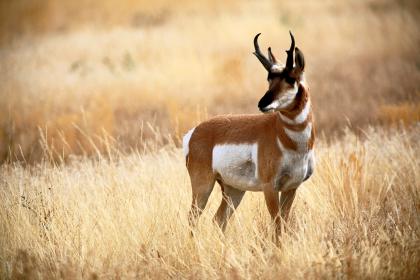
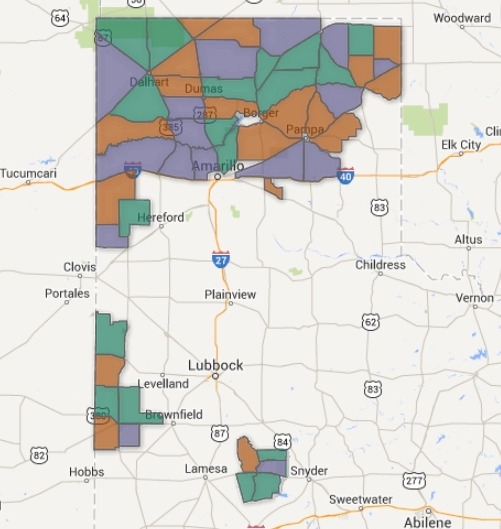
A new experimental pronghorn hunting season in parts of the Texas Panhandle September 28 through October 6 will allow landowners to control harvest of buck pronghorn on their properties. The experimental season will be in herd units 8, 17, and 25, which include portions of Dallam, Hartley, Sherman, Moore, Roberts, and Gray counties. I expect the season will capture a lot of the breeding season, meaning hunters should see goats on the move.

Under prior statewide regulations, Texas Parks and Wildlife Department determined the pronghorn harvest quota and issued permits directly to landowners. With the new pronghorn rules, landowners or their agents within selected pronghorn management units in the northeast and northwest Panhandle will determine the harvest quota and control buck pronghorn harvest on their property during the three-year pilot project. Hunters are reminded they must receive landowner permission to access their property.

Texas Pronghorn Antelope Hunting

The goal of the project is to simplify pronghorn hunting regulations and increase hunting opportunities in areas with stable populations. Wildlife officials will closely monitor pronghorn herds during the pilot project to ensure populations remain healthy.

How many pronghorn permits will I get?

The number of permits issued within a Herd Unit is based upon results of annual surveys (pronghorn numbers, sex ratios, and fawn crops). Permits are allocated to specific tracts within a Herd Unit, which is directly related to acres of pronghorn habitat for each tract. TPWD suggests that permit demand often exceeds the harvestable surplus, so not all landowners will receive a permit every year.

How much do pronghorn permits cost?

Permits are free. Receipt of permits is dependent upon timely submission of application and harvest cards. Applications must be submitted by August 1. Pronghorn Harvest Cards are due by October 31.

Source

Pronghorn Check Stations in Texas Panhandle

The Texas pronghorn hunting season is just around the corner and it’s important to remind all successful hunters that speed goats harvested in certain parts of the state must be reported. Texas Parks and Wildlife Department (TPWD) reports all hunters are required to present the intact, unfrozen head of harvested pronghorn at a mandatory check station within 24 hours of harvest. TPWD wildlife biologists will then collect essential biological information from the harvested animal.

These data will be analyzed annually to make sure Texas pronghorn populations remain healthy, allowing for hunting well into the future. Pronghorn check stations are at the following locations:

  • In Dalhart, at the park off of Lake Drive. Check station is across from People’s Church (1929 Apache Dr.). GPS coordinates of Dalhart check station (36.038269, -102.506358),
  • In Pampa, at Chisum Ranch office (on Price Rd, south of HWY 152). GPS coordinates of Pampa check station (35.531080, -100.989493).
  • Check stations will be open through the 9-day season (Sept. 28 – Oct. 6 from 9 a.m. – 9 p.m. and the following Monday (Oct. 7) 9 a.m. to noon.

A check station receipt will be given to each hunter to provide permit proof of compliance with the mandatory pronghorn check station regulation. Hunters who harvest pronghorn outside the experimental area are also encouraged to bring their harvest in at the check stations to contribute biological data. Wildlife biologist will age their harvest for free.

Texas Pronghorn Antelope Unit Map

Pronghorn Hunting

Source: “The breeding season of the pronghorn in Trans-Pecos Texas extends from the last week in August to the first week in October. The most vigorous bucks gather small harems of two to 14 does. Young bucks frequently linger at the outskirts of the harem herd and at times attempt to steal a doe or even to interfere with a mature buck in his mating activities. The master of the harem has an endless task in keeping his does together and warding off intruding bucks. The gestation period is between 7 and 7½ months. The young (usually two) weigh from 2 to 4 kg each and appear in May or June.”

Texas Bowhunting Season Gives Whitetail Deer Hunters First Shot

Whitetail bucks are busy working over saplings and rubbing the velvet off of their antlers so that means testosterone levels are ramping up. It also means that the whitetail deer hunting season is just around the corner. Archery season comes first each year and that means practice, practice, practice, because bowhunters get first crack at Texas’ white-tailed deer herd. Though the season is still first, a few things have changed over the years. The archery deer season includes not only bows and arrows, but also crossbows. This hunting methods change has no doubt increased hunter participation during the bowhunting season.

Texas Bow Hunting Season for Whitetail Deer Opens Soon

Source: “Nobody knows for sure how many archery hunters will be afield once bow-and-arrow deer and turkey season begins Sept. 28 but it’s probably more than 170,000, according to Tom Newton, license revenue manager for the Texas Parks and Wildlife Department. For the 2013 season, hunters paid for 36,017 archery endorsements that are required to hunt during archery season. Super Combo Hunting and Fishing Licenses (420,834 in 2013) and Senior Super Combos (60,992 in 2013) include all endorsements fees. Newton said surveys suggest 29.9 percent of Super Combo buyers and 14.6 percent of Senior Super Combo buyers participate in archery hunting.

Whitetail deer management is now practiced widely by Texas hunters. According to Alan Cain, Texas Parks and Wildlife Department’s White-tailed Deer Program Leader, Texas hunters killed 546,000 deer last hunting season, 304,000 bucks and 242,000 does. That sounds like quite a few deer, but thirty years ago hunters shot more bucks than that. Now the deer harvest is much more balanced with hunters shooting bucks and does at similar rates. The “old timers” never wanted to shoot their mama cows, but anything with horns was fit for the table. Times have indeed changed.